
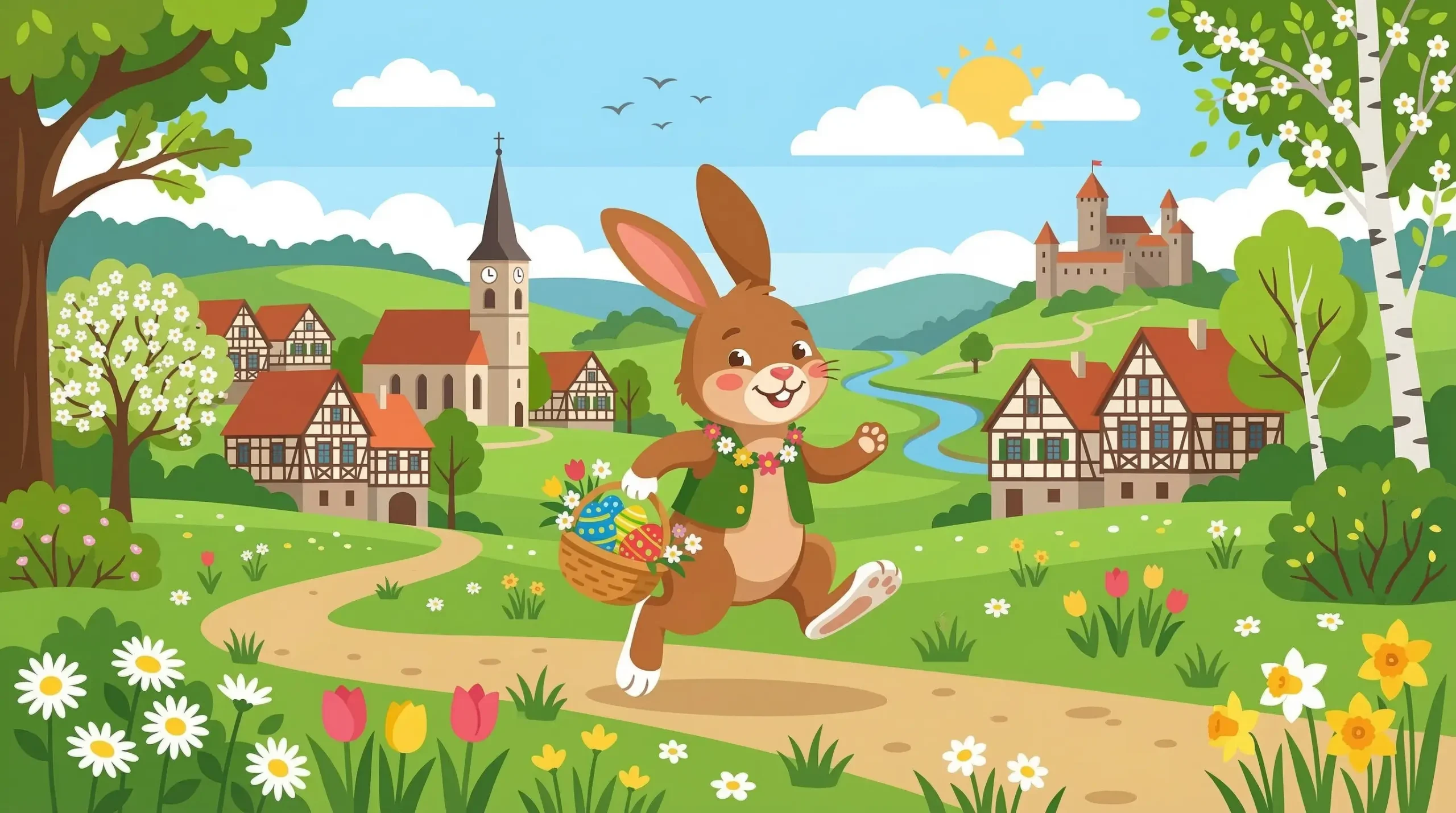
The Easter Bunny in Germany is one of the most famous symbols of Easter. In German tradition, it is called Osterhase. According to an old custom, it is the one who brings children colored eggs and sweets, which are hidden in the garden or at home. This tradition originated in the German lands several centuries ago and later spread to other countries.
What Osterhase Means
The German word Osterhase means “Easter hare.” In Germany, it is one of the most recognizable Easter images alongside painted eggs, spring decorations, and festive sweets. That is why the word Osterhase often appears at fairs, on chocolate packaging, cards, and decorations.
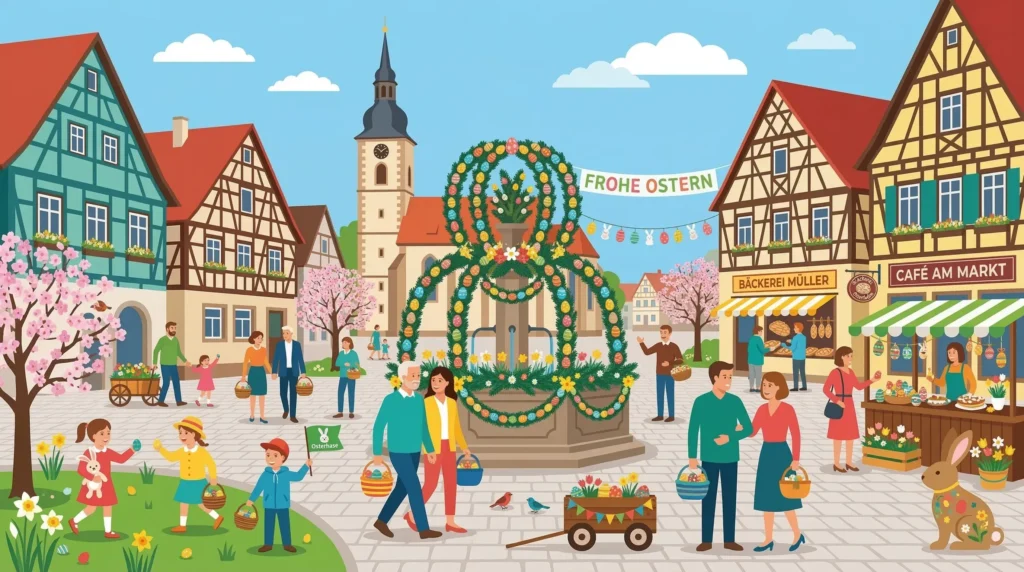
For children, Osterhase is not just a symbol, but almost a fairy-tale character. According to tradition, it hides eggs and sweets, which are then searched for in the garden, in the yard, or at home. This is how the Easter Bunny became an important part of the family celebration in Germany.
Although in everyday speech this character is sometimes called the Easter rabbit, in German tradition the expression “Easter hare” is used more often.
History of the Easter Hare
Today, the Easter hare is known in many countries, but the roots of this tradition are usually connected specifically with the German lands.
First Mentions in Germany
The custom of linking the hare with Easter appeared in Protestant regions of Europe in the 17th century. It was in German tradition that Osterhase became the character who hides or brings eggs to children.
Early descriptions of this tradition tell of children searching for eggs left by the Easter hare. This image proved especially enduring because it combined the Christian holiday of Easter with vivid spring symbolism and a children’s game.
How the Tradition Spread to Other Countries
Over time, the German tradition spread far beyond the country. That is why the Easter hare is familiar today not only in Germany, but also in many other countries.
Later, German immigrants brought the image of Osterhase to the United States, where it gradually turned into the widely known Easter Bunny. In this way, the German Easter hare became an international symbol of Easter. That is why the cultural roots of the Easter hare are most often linked specifically to German Easter tradition.
Why a Hare
The image of the hare in Easter tradition did not appear by chance. It is connected with spring, the renewal of nature, and the idea of new life. In European culture, the hare was often associated with fertility, the revival of nature, and the beginning of a new season. This symbolism matched Easter well, since Easter is also associated with renewal and life.
In addition, hares are especially noticeable in spring, when nature awakens after winter. That is why the image of Osterhase turned out to be understandable and vivid: it fit well both into folk customs and into children’s Easter games.
Over time, it was the hare, and not another animal, that became the main figure of Easter symbolism. Today, it can be seen everywhere — from chocolate figures to festive greeting cards.
The Easter Hare in Modern German Traditions
Today, Osterhase remains a living part of German Easter culture. This is especially noticeable in family traditions, children’s games, and festive sweets.
Egg Hunts for Children
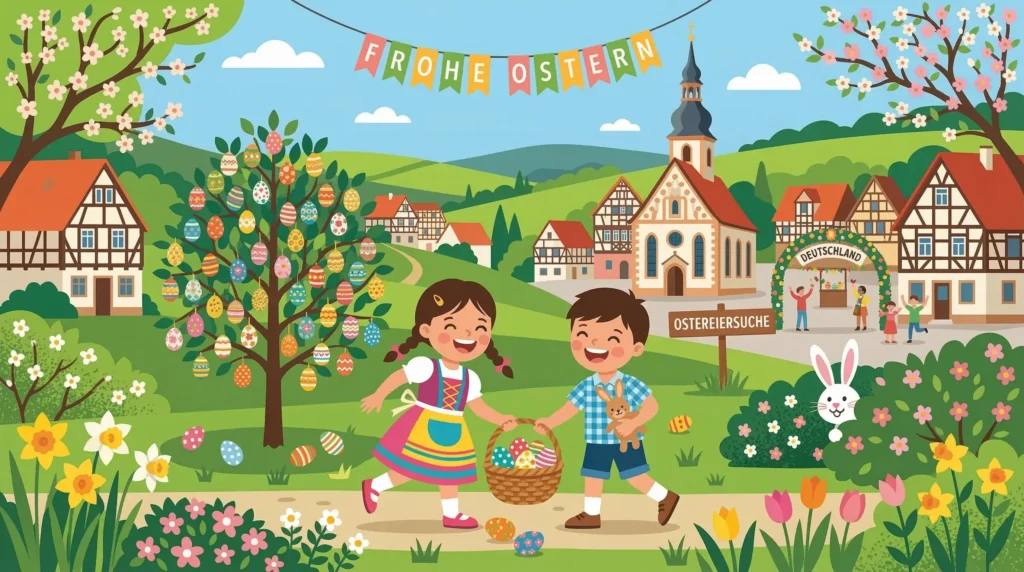
One of the most beloved modern traditions is connected specifically with children. Here, the Easter hare appears as a fairy-tale character who brings small surprises.
In modern Germany, the Easter hare is above all associated with egg hunts. Parents hide painted eggs, chocolate, and small gifts in the garden, on the balcony, or at home, and children look for them on Easter morning. According to tradition, all of this was brought by Osterhase.
Chocolate Hares and Easter Sweets
Besides games and egg hunts, the image of the Easter hare has long become part of holiday commerce as well. Before Easter, it becomes one of the most noticeable figures in shops and on sweet packaging.
Before Easter in Germany, chocolate hares appear in almost every supermarket, bakery, and sweet shop. Osterhase has long become an important element of the holiday assortment and children’s gifts.
In addition to chocolate figures, the image of the Easter hare is used on candy packaging, greeting cards, napkins, candles, and Easter decorations. So even people who do not observe religious customs still know this symbol well.
Where You Can See the Easter Hare in Germany
During the Easter season, the image of Osterhase becomes part of both the city and home atmosphere. It can be seen at fairs, in shop windows, and in ordinary holiday decorations.
Easter Fairs
One of the most noticeable places where Osterhase appears is at seasonal fairs and spring markets. It is there that the image of the Easter hare is especially strongly felt as part of the festive atmosphere.
During the Easter season, the image of Osterhase can be seen on souvenirs, children’s goods, festive displays, and fair decorations. It has become an important part of the spring atmosphere in many German cities.
Shops, Windows, and Home Decor
But it is not limited to fairs. Before Easter, the Easter hare can be seen almost everywhere seasonal decor appears.
Besides fairs, Osterhase is easy to spot in shops, shopping centers, and ordinary residential neighborhoods. Before Easter, Germans decorate their homes with branches, eggs, hare figurines, and spring decor. That is why the Easter hare in Germany is not only an old symbol, but also a visible part of the modern urban and family celebration.
The Easter Hare in Culture and Traditions
The Easter hare in Germany is one of the most recognizable symbols of Easter. It combines old tradition, spring symbolism, and a family celebration for children and adults. That is why the image of Osterhase still remains vivid and popular today.
If you are interested in other customs and symbols of the holiday, read more in a separate article: Easter Traditions in Germany. General information about the holiday can be found in the main article: Easter in Germany.
FAQ
Osterhase is the German word for the Easter hare. In Germany, it is considered one of the main symbols of Easter and is connected with the tradition of bringing eggs and sweets to children.
The Easter hare is connected with German tradition. The origin of this custom is usually traced to Protestant regions of Europe in the 17th century, and later German immigrants brought it to the United States.
The hare became an Easter symbol because of its connection with spring, new life, and fertility. Over time, German tradition assigned it the role of the character who brings and hides eggs for children.
Yes, the tradition of the Easter hare is usually associated specifically with the German lands. Early written mentions date back to the 17th century, and later the custom spread to other countries.
Before Easter, Osterhase can be seen at fairs, in shop windows, on sweet packaging, in home decor, and in festive decorations.
Today, the Easter hare is more often seen as a cultural and family symbol of Easter, especially in children’s traditions. It is connected with spring, renewal, and festive customs.
