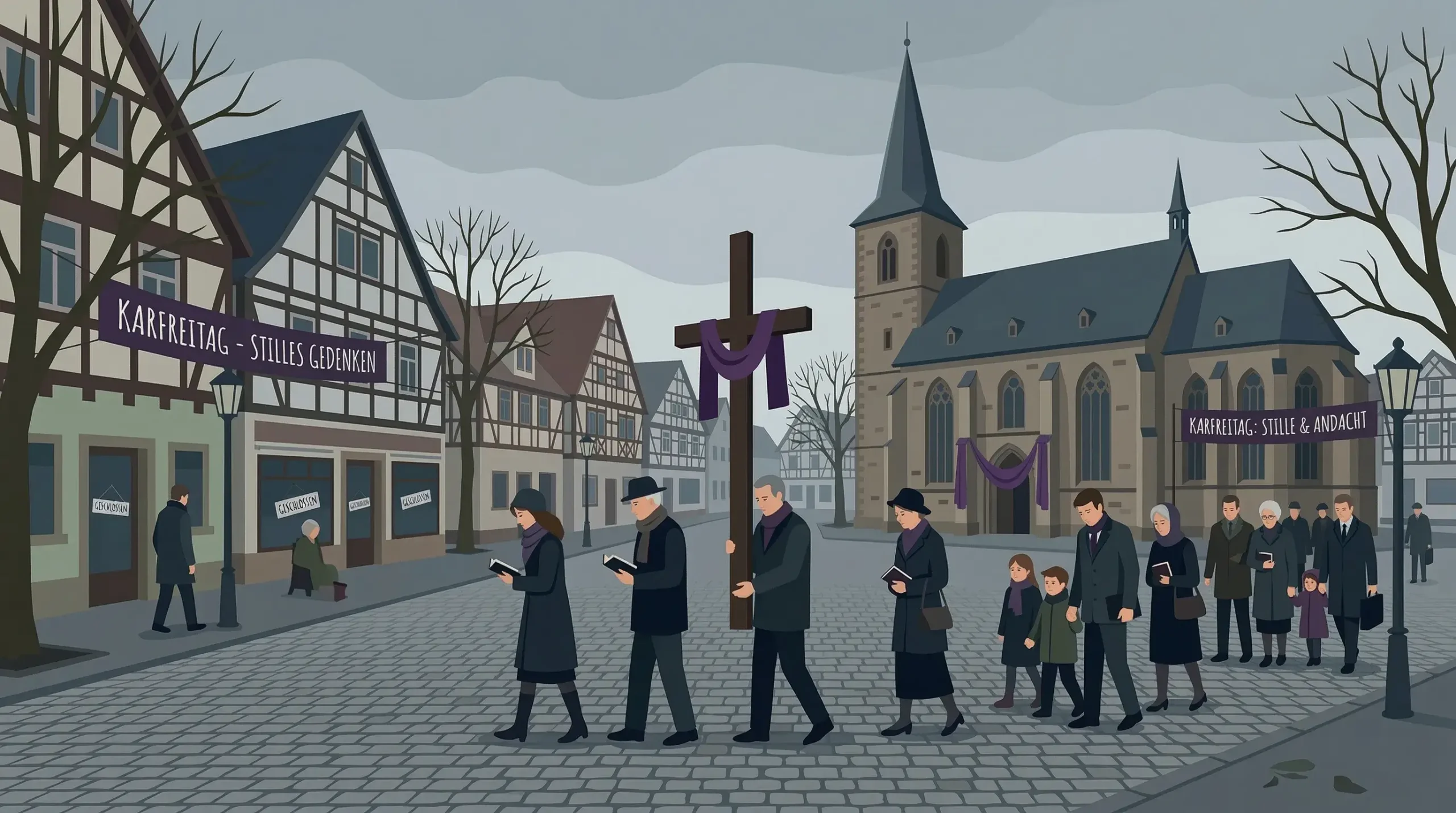
Good Friday in Germany is an official public holiday and an important part of the Easter period. On this day, which is called Karfreitag in Germany, most shops are closed. In addition, many federal states impose restrictions on parties, dancing, and noisy events. That is why Good Friday is considered one of the quietest days of the Easter weekend.
In 2026, Good Friday (Karfreitag) in Germany falls on April 3. If you need exact Easter dates by year, see the separate article: When Easter Is in Germany.
What Is Karfreitag
Karfreitag is Good Friday, one of the most important days in the Christian tradition before Easter. For believers, this day is connected with the remembrance of the crucifixion of Jesus Christ. It is seen as a time of silence, reflection, and church prayer.
In Germany, Karfreitag belongs to the Easter period and holds a special place among spring holidays. Unlike the more joyful Easter Sunday, Good Friday passes in a restrained and quiet atmosphere.
That is why Karfreitag in Germany is seen not as an ordinary day off, but as a day with clear religious and cultural significance. This is reflected both in public life and in the rules that apply on this day.
Is Karfreitag a Public Holiday in Germany
Yes, Karfreitag is an official Feiertag in Germany. It is a public holiday, so for most residents it is a non-working day.
On Good Friday, supermarkets, shopping centers, banks, and many public institutions are usually closed. That is why shopping and other everyday errands are best planned in advance, before the Easter weekend begins.
Tanzverbot — Ban on Dancing
One of the best-known features of Karfreitag in Germany is Tanzverbot, or the ban on dancing. On Good Friday, many federal states impose restrictions on parties. Loud music, club events, and other noisy entertainment are prohibited.
The meaning of these restrictions is connected with the character of the day itself. Karfreitag is considered a time of mourning and silence, so entertainment events on this day are seen in many places as inappropriate.
That is why the topic of Tanzverbot often sparks discussion in Germany and regularly becomes the subject of search queries before Easter. At the same time, the exact rules may differ depending on the federal state: in some regions the restrictions are stricter, while in others they are milder.
Before going to a concert, party, or another event on Karfreitag, it is better to check the local rules and the hours during which the ban applies. This is especially important if you have recently moved to Germany or are planning a trip to another region.
Are Shops Open on Karfreitag
On Karfreitag, most regular shops and supermarkets in Germany are closed. This applies to grocery chains, shopping centers, and most everyday stores, because Good Friday is an official public holiday.
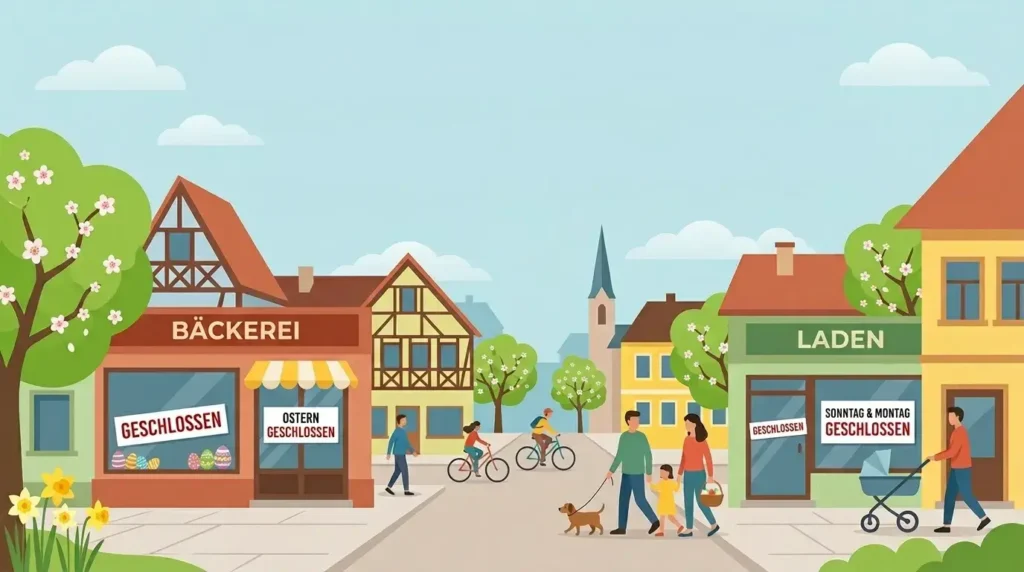
If you need to buy groceries or something urgently, you should not count on the normal opening hours of Aldi, Lidl, Rewe, Edeka, or Kaufland. It is better to do your main shopping in advance, before the Easter weekend begins.
Exceptions are sometimes possible at train stations, airports, gas stations, and small kiosks. But the selection there is usually limited, and opening hours depend on the specific place and region.
To learn more about supermarket opening hours and where you can buy groceries on public holidays, read the separate article: Are Shops Open on Easter in Germany.
How Germans Spend Good Friday
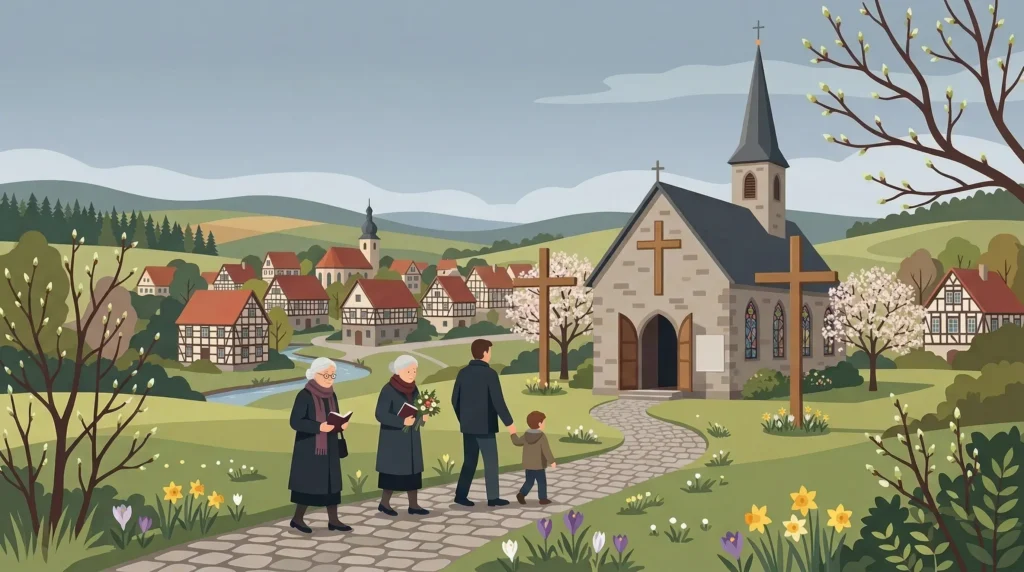
For many Germans, Karfreitag is a quiet and peaceful day. Believers attend church services, while others spend time at home, with family, or on calm walks. The atmosphere of this day is usually noticeably different from other holiday dates.
Unlike Easter Sunday or Easter Monday, Good Friday in Germany is rarely associated with noisy events. It is more a day of silence, reflection, and rest than of active entertainment.
That is why Karfreitag in Germany is seen not only as a religious holiday, but also as a special cultural day with its own rules, restrictions, and traditions.
Quick Summary of Karfreitag in Germany
Karfreitag in Germany is an official public holiday that belongs to the Easter period and is considered a time of silence, remembrance, and calm. On this day, most shops are closed, and in many federal states there are restrictions on parties, dancing, and noisy events.
If you live in Germany or are planning a trip during the Easter weekend, it is important to keep the special features of Good Friday in mind in advance. Read more about the holiday period in the article Easter Weekend in Germany, and about the holiday itself in the main article Easter in Germany.
FAQ
Yes, Karfreitag is an official Feiertag in Germany. It is a public holiday, so for most residents it is a non-working day.
No, most regular shops and supermarkets are closed on Karfreitag. If you need groceries or essential items, it is better to buy everything in advance or look for open stores at train stations, gas stations, and airports.
Tanzverbot means restrictions on dancing, parties, and some noisy entertainment events on Good Friday. In many German federal states, these rules apply because of the special character of Karfreitag as a day of silence and mourning.
On Karfreitag, many German states impose restrictions on parties, dancing, loud music, and some mass entertainment events. The exact rules depend on the federal state, so it is best to check them in advance.
In many German federal states, Karfreitag comes with restrictions on dancing and noisy events, but the exact rules may differ depending on the region. That is why it is best to check the local rules before an event.
In 2026, Karfreitag in Germany falls on April 3.
Many Germans spend Karfreitag quietly. They attend church services, stay at home, meet with family, or spend the day without noisy entertainment. It is one of the quietest days of the Easter period in Germany.
